WAYBACK WEDNESDAY FOR A SPOOKY SATURDAY
Normally, Wayback Wednesday falls on...well Wednesday. But today with Halloween approaching we present a "Wicked Wayback" to enjoy on a spooky Saturday. Be forewarned that while this is a valid history of our neighborhood, it truly is a gruesome tale. So lock your doors, close your windows and turn on all your lights.
A special thanks to Mark Masek of CemeteryGuide.com for permission to post this story.
THE KIDNAPPING OF MARION PARKER (OCT. 11, 1915--DEC. 17, 1927)
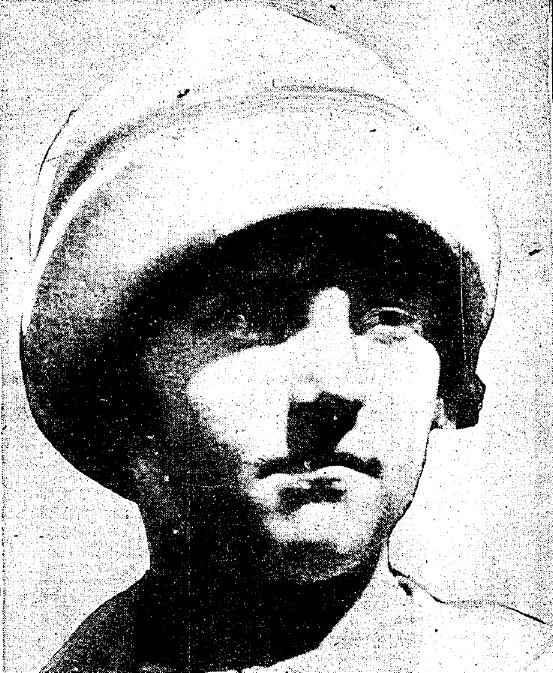
On
Thursday, Dec. 15, 1927, shortly after noon, a well-dressed young man
with dark, wavy hair rushed into the Mount Vernon Junior High School on
17th Street in Los Angeles. The man went into the school office, found
registrar Mary Holt, and told her that he worked at the Los Angeles
First National Trust and Savings Bank and that his boss, Perry M. Parker, had been involved in an automobile accident and was seriously injured.
The
man said Parker was asking for his daughter, who was a student at the
school, and he had been sent to retrieve her. Holt said she was a little
suspicious about the man because he asked for Parker's "younger
daughter." Parker had two daughters, Marion and Marjorie, both students
at the school, but they were 12-year-old twins. When questioned further,
the man said he was sent to pick up the "smaller one."
When
Holt hesitated, the man said, "I am an employee of the bank where Mr.
Parker is chief clerk, and if there is any doubt in your mind, here is
the bank's telephone number. You may call there."
Holt
said the man's sincerity convinced her, and she sent for Marion, who
was brought from a Christmas party being held in one of the school
classrooms. When Marion arrived at the school office, the man
reassuringly patted her arm, told her that her father had been in a car
accident, and that he was going to take her to him. Marion, thinking her
father was injured, eagerly went with the man, who escorted her out to
his waiting car.
As
Marion and the man walked out to his car, Marjorie Parker saw them, and
she later told police that she didn't recognize the man. The man who
took Marion was described as a white man, 25 to 30 years old, 5-feet-8,
with a slender build, thin features and dark brown, wavy hair.

That evening, Perry Parker received a telegram at the family home at 1631 South Wilton Place,
less than a mile from the school. The telegram had been sent at 6:20
p.m. from the Western Union office in Alhambra, Calif., and told Parker
that his daughter had been kidnapped, and to expect further telegrams
with ransom demands. "Marian (sic) secure," the telegram read. "Use good
judgement. Interference with my plans dangerous." Police suspected that
the man was familiar with the Parker family, since Perry M. Parker did
work at the bank, but he was home that day, celebrating his 48th
birthday, with his wife, Geraldine.
The
next day, Parker received a special delivery letter, demanding $1,500
for his daughter's safe return.
According to the letter, "Fulfilling these terms with the transfer of
the currency will secure the return of the girl. Failure to comply with
these requests means no one will ever see the girl again -- except the
angels in heaven. The affair must end one way or another within three
days -- seventy-two hours. You will receive further notice." The letters
and telegrams were first signed "George Fox," then simply "The Fox." As
more than 2,000 police officers worked on the case throughout Southern
California, police initially told Parker not to make the payment. But
after Parker received additional telegrams and phone calls, with
increasing threats to kill Marion if the kidnapper's demands weren't
met, police decided that the best hope to get Marion home safely was to
pay the ransom. The kidnapper called Parker and arranged a meeting for
that evening at 10th Street and Gramercy Place, but the kidnapper
noticed that police vehicles were following Parker's car, so he didn't
keep the appointment.

One of the special delivery letters to Parker included a letter written by Marion: "Dear Daddy and Mother, I wish I could come home. I
think I'll die if I have to be like this much longer. Won't someone tell
me why all this had to happen to me. Daddy please do what this man
tells you or he'll kill me if you don't. Your loving daughter, Marion
Parker. P.S. Please Daddy I want to come home tonight."
Newspapers
in Los Angeles and across the country were filled with stories and
photos about the search for the missing girl, and the family's vigil,
including family photos of Geraldine Parker with Marion and Marjorie and even photos of the family dog, Patsy, sitting on a double scooter belonging to Marion and Marjorie, "vainly seeking its missing mistress."

On
the morning of Saturday, Dec. 17, Parker received another telegram,
again demanding $1,500, and saying that if Parker didn't come alone to
the next meeting, Marion would be killed. That evening, at 7:35 p.m.,
Parker received a phone call from the kidnapper. He was told to
immediately leave his home with the money, and drive to the corner of
Fifth Street and Manhattan Place in Los Angeles.
The kidnapper said he would pull up beside Parker's car, show him that
Marion was safe, take the money, and would drop Marion off a block away.
As
instructed, Parker left his home with $1,500 in marked $20 bills, and
did not tell police about the rendezvous. Shortly after he arrived at
the meeting spot, in front of 428 Manhattan Place, a Chrysler coupe
pulled up beside Parker's car, with Marion sitting motionless in the
front seat.
The
driver, with a white handkerchief over his face, pointed a
large-caliber handgun at Parker. "You know what I'm here for," the man
told Parker. He then pointed at Marion in the front seat of the coupe.
"Here's your child," he said. "She's asleep. Give me the money and
follow instructions."
Parker handed over the money and, as he had been instructed, followed the coupe to 432 South Manhattan Place,
where the car door opened, and Marion was pushed out onto the lawn.
Parker tried to get the license plate number of the car, but the
kidnapper had bent the ends of the plate in, so Parker was only able to
get a partial number.

As
soon as the coupe drove off, Parker jumped from his car and rushed to
his daughter's side, took her in his arms, and realized that she was dead. When passers-by heard Parker's screams, they called police.
Marion
Parker had been horribly mutilated, and her body wrapped in towels.
Both of her legs had been cut off close to the body, her arms had been
cut off, and she had been disemboweled and her body stuffed with rags. A
wire had been twisted tightly around her neck, cutting deeply into her
skin, then went up the back of her neck and was wrapped tightly around
her forehead, in an attempt to hold her head up. Her eyelids were sewn
open to make it appear that she was still alive. A medical examination
determined that Marion was killed just a few hours before her body was
dumped out of the car.
With
the recovery of Marion's body, the case escalated from a kidnapping to a
murder investigation, and all of Southern California seemed ready to
join in the hunt for the killer. Police investigators worked on reports
that the murderer might have fled south to Mexico, or north toward San
Francisco.

On Sunday, Dec. 18, police announced that they had recovered the Chrysler coupe driven by the kidnapper in a parking garage in the Westlake Park district, and five separate bundles containing missing parts of the slain girl's body were found, dumped along roadways in Elysian Park, near the current site of Dodger Stadium. The car was determined to have been stolen during a hold up in Kansas City, Mo., more than a month before Marion was abducted. About a block away from the spot where Marion's body was dumped, at 620 South Manhattan Place, a resident found a suitcase containing blood-soaked papers, and a spool of thread. Identical thread had been used to sew Marion's eyes open during the kidnapper's meeting with her father.

Warner
Brothers' radio station KFWB broadcast a call to raise money for a
reward fund. The station had hoped to raise $1,000, but quickly received
contributions of more than $20,000. Evangelist Aimee Semple McPherson
broadcast a plea for her followers to contribute to the reward fund.
Within a few days of the crime, the total reward reached $50,000 -- over
$600,000 in 2010 dollars.
Thousands
of police officers from San Francisco to San Diego were actively
working on the case, and thousands of calls were received from citizens
hoping to provide useful information. An estimated 12,000 members from
American Legion posts throughout Southern California, described as "the
greatest group of ex-servicemen ever called out in a peacetime
emergency," organized and offered their services to the police effort.
The U.S. Secret Service also volunteered to help the L.A. Police
Department in the search for the killer, and 100 Los Angeles
firefighters assisted in the search of the areas in Elysian Park near
where the bundles containing her body parts were found.
California
Lt. Gov. Buron Fitts sent a telegram to Gov. Clement C. Young, calling
the murder of Marion Parker, "the most vicious and atrocious crime in
California history," and asking that the state offer a substantial
reward for the capture and conviction of the murderer.
Meanwhile, private funeral services were held for Marion at the
Little Church of the Flowers
at Forest Lawn Memorial-Park in Glendale, Calif. Marion's body was
cremated and quietly laid to rest inside Forest Lawn's Great Mausoleum,
in the Columbarium of Peace on the Evergreen Terrace.
The
first major clue in the case came from one of the towels wrapped around
Marion's body. A label on the towel identified it as coming from the
Bellevue Arms Apartments, in an area of the city northwest of downtown
known as Angelino Heights. The manager of the 88-unit apartment
building, at 1170 Bellevue Ave.,
said a man fitting the description of the suspect had rented an
apartment the preceding month -- Room 315, in the back of the building
-- giving the name "Donald Evans."
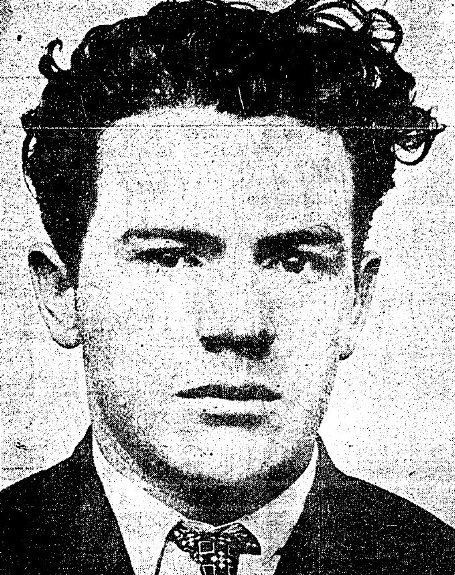 "Evans" was later determined to be William Edward Hickman, 19, who had been arrested
in June 1927 for attempting to cash a forged check at a bank in Los
Angeles. Hickman had worked for six months as a messenger at the same
bank where Parker worked, but he lost his job after pleading guilty to
the forgery charges. After Hickman was convicted of the forgery charges
and given probation, he returned to the bank and asked to get his
messenger job back, but his request was denied -- by Perry Parker.
Parker also said that, shortly after Hickman lost his job at the bank,
he applied for a job with another company, and Parker was asked to
supply a reference. He refused, and Hickman didn't get the job.
At
the time of his forgery arrest, Hickman lived with his mother and
sister on Birch Street in Alhambra, Calif. Shortly after his arrest, the
family moved back to their hometown of Kansas City, Mo., and Hickman
found a job as a theater usher. In early November 1927, Hickman stole a
1927 Chrysler coupe at gunpoint from Dr. Herbert Mantz in Kansas City,
drove to Chicago, then drove back to Los Angeles. On Nov. 23, he rented
the apartment at the Bellevue Arms, giving the name "Donald Evans," and
requesting a quiet room in the back of the building.
By
the time police arrived to search the apartment, Hickman was gone.
Fingerprints found at the scene matched prints found on the Chrysler
coupe, and on the ransom telegrams. The prints also matched those taken
from Hickman when he was arrested on the forgery charges.
A key piece of evidence, police said, was a piece of a Brazil nut found
in a trash can in Hickman's apartment. Police said the piece exactly
fit with another piece found in the pocket of Marion's dress when her
body was dumped out of the kidnapper's car.
On
Tuesday, Dec. 20, Hickman was formally charged with kidnapping and
murder, and the massive search was on. Men all over the country who fit
Hickman's description were arrested and questioned. Los Angeles police
detectives on two planes flew to Las Vegas to arrest a possible suspect
on a bus headed to Terre Haute, Ind. Hickman sightings were reported in
Chicago; New York City; Tucson, Ariz.; Tulsa, Okla.; Wichita, Kans.; and
Des Moines, Iowa, and all along the West Coast.
One
man who lived a few miles from the scene of the abduction was arrested
five times before police finally gave him a letter stating that he was
not Hickman, and he shouldn't be arrested again. A man fitting Hickman's
description was surrounded by an angry mob at Sixth and Hill streets in
downtown Los Angeles. Police arrived just in time to rescue the man,
questioned him, and released him. "This and many other occurances of
similar type demonstrate the fever pitch into which the details of the
horrible crime have thrown the citizens of Los Angeles," according to
the Los Angeles Times.
Hickman,
however, was long gone. The day after his meeting with Parker, Hickman
hijacked a 1928 green Hudson sedan on Hollywood Boulevard, stole $15
from the driver, and headed north to San Francisco where he spent one
night in a hotel, then continued on into Oregon, then Washington.
On
Wednesday, Dec. 21, Hickman purchased a hat, gloves and underwear at a
store in Seattle, and paid for his purchase with one of the $20 bills he
had received from Parker. The clerk in the store recognized the serial
number on the bill as one from the murder case, and called police, but
Hickman had left before officers arrived. Another of the marked $20
bills was used to pay for gasoline at a garage in Kent, Wash.
Hickman was finally arrested on Thursday, Dec. 22, on the road near Echo, Ore., near the Washington border. Inside his car -- the green Hudson sedan
he had stolen in Los Angeles -- was a sawed-off shotgun and a
.45-caliber handgun, as well as $1,400 remaining from the ransom money.
When he was stopped by police, Hickman surrendered quietly, saying,
"Well, I guess it's all over." In his initial statements to police, he
admitted being involved in Marion's kidnapping, but he said he didn't
kill her. He told police he was working with two accomplices, and one of
them -- Andrew Cramer -- killed the little girl. Hickman said he
became involved in the kidnapping plot because he needed money for
college.
But
Cramer, the man Hickman identified as Marion's killer, had a solid
alibi -- he had been in jail in Los Angeles since four months before the
kidnapping.

While Hickman was being held in the City Jail in Pendleton, Ore., hundreds of people
crowded into an alley next to the jail, hoping to get a glimpse of the
famous prisoner. In response to their requests, Pendleton Police Chief
Tom Gurdane, who was one of the two officers who arrested Hickman,
brought Hickman to a door of the jail where the crowd could file past
and get a look at him. According to the Associated Press, "gaudily
blanketed Indians stared impassively at the youth, pretty women stopped
to peer into the grated room, grim cowmen with their own ideas of
justice stalked past with audible comment, and business men made hurried
trips to the scene and took their places in the line."
Fearing
possible mob violence, police transported Hickman back to Los Angeles
by train under tight security and secrecy. On the train, accompanied by
Los Angeles police officers, Hickman finally confessed, saying that he
had acted alone and had no accomplices. He then provided police with a
detailed, 19-page confession
in which he said the girl was cut up because he thought that would make
it easier to successfully dispose of her body. Hickman also wrote a
six-page document outlining his motives for the crime. (During Hickman's
trial, when his actions in killing the girl were detailed, the Los
Angeles Times decided that the information was "unprintable." The Times
did report, however, that "the confession made horribly plain the fact
that Hickman's little victim did not die of strangulation or of fright,
but as the result of dismemberment by Hickman.")
Hickman
also said in his confession that his decision to kidnap Marion Parker
was not an act of revenge against her father, but simply because he had
worked at the same bank as her father, and he had seen her coming in to
visit him. Hickman said that he needed the money to go to college. He
wanted to attend Park College in Parkville, Mo., a religious institution
near Kansas City. After college, he said, he planned to "go straight
from then on."
Hickman
said he brought Marion to his apartment and strangled her with a towel
because, he said, "I was afraid she would make a noise." He placed her
body in the bathtub, cut off her arms and legs, sliced her open at the
waist, and then put her body on a shelf, with a towel beneath it to soak
up the blood.
Hickman
said he then realized that he would have to prove that Marion was still
alive to receive the ransom money. So he combed her hair, put powder on
her face, used a needle and thread to hold her eyelids open, then
carried her body out in a suitcase to meet with Parker.
Hickman
also confessed to a series of drug store robberies in Los Angeles,
including one in December 1926 in which the store proprietor,
24-year-old Clarence Ivy Toms, was shot to death.

At
his trial for the Marion Parker murder, Hickman attempted to plead not
guilty by reason of insanity -- one of the first such efforts in the
state of California -- but, after 13 days of testimony, that defense was
rejected by the jury after only 36 minutes of deliberations. One of the key pieces of
evidence against the insanity defense was a letter written by Hickman to
a fellow prisoner, asking for his advice on how to secure an insanity
verdict. "I've got to throw a fit in court," Hickman wrote, "and I
intend to throw a laughing, screaming, diving act before the prosecution
finishes their case -- maybe in front of old man Parker himself."
Hickman was found guilty and sentenced to death.
"The
state wins by a neck," Hickman said after the jury's verdict was read.
"I don't think I have much to live for, and I don't know yet why I
killed the Parker girl, but I did it, and I'll take my punishment." In a
separate trial, Hickman was also found guilty in the Toms murder, and
was sentenced to life in prison.
Hickman
spent his final days on Death Row in San Quentin writing letters of
apology to the people he had wronged, reading the Bible and listening to
jazz records on his phonograph.
After
unsuccessful appeals all the way to the U.S. Supreme Court, Hickman was
hanged on Oct. 19, 1928, at San Quentin State Prison -- 10 months after
Marion Parker's murder -- then quickly buried in Holy Cross Cemetery in
Lawndale (later Colma), south of San Francisco, in an unmarked grave.
Ironically, the cemetery also contains the remains of two victims of
sensational murders in California -- coffee heiress Abigail Folger,
who was stabbed to death along with actress Sharon Tate by followers of
Charles Manson in Los Angeles in 1969, and San Francisco Mayor George Moscone,
who was shot to death in his office by City Supervisor Dan White in
1978. (The L.A. Times also reported that Hickman's father planned to
take the killer's body back to his birthplace of Hartford, Ark., where
he would be buried in the village cemetery.)
Although
Hickman told prison guards and his cellmate that he would walk
confidently to the gallows, strengthened by his new-found religious
beliefs -- he converted to Catholicism while in prison -- he only got
about half way up the 13 steps before he slumped, and guards had to prop
him up to assist him to the top. As he reached the trap door, he looked
toward the ceiling and began reciting a quiet prayer, witnesses said.
When the black hood was placed over his head, he started to collapse
again, and the executioner quickly signaled for the rope to be cut,
releasing the trap door at 10:10 a.m.
Since
Hickman was already slumping forward when the trap door opened,
witnesses said the drop didn't have the desired effect of snapping his
neck and causing an immediate death. Instead, his head hit the side of
the gallows, and he dangled at the end of the rope, violently twitching
and jerking. The prison doctor climbed a step ladder next to Hickman and
put a stethoscope to his chest. Fifteen minutes after the trap door
opened, the doctor stepped away and nodded, signifying that Hickman was
dead -- not a quick death from a broken neck, but a slow strangulation.
Pages from Hickman's confession are on display at the Los Angeles Police Historical Society museum, along with a thick album of clippings from the newspaper coverage of the case.
The
school from which Marion was kidnapped, the Mount Vernon Junior High
School, has been completely rebuilt, and was renamed the Johnnie L.
Cochran Jr. Middle School in 2006. Although the original school building
is gone, a large stone piece from the original building, carved with
the name "Mount Vernon Junior High School", was saved, and is currently located on the grounds of the school, next to the main entrance.

The Bellevue Arms apartment building, where Marion was killed, is currently being remodeled into condominiums,
to be known as The Brownstone Lofts. The original exterior and interior
brickwork will remain, including the original archway over the front door,
where Marion likely entered. The condominiums will correspond roughly,
but not exactly to the layout of the original apartments, and there will
be a Unit 315. And, yes, Unit 315 will have a bathtub.
Marion's
father, Perry Marion Parker, died in 1944 at the age of 65. Her mother,
brother and twin sister moved out of the family home on South Wilton
Place in 1948. Marion's mother, Geraldine Heisel Parker, died in San
Diego, Calif., in 1963, at the age of 75. Her brother, Perry Willard
Parker, died in Los Angeles in 1983, at the age of 75. Marion's twin
sister, Marjorie H. Parker, married, moved to San Diego, and died in
1987, at the age of 71.
Visit CemeteryGuide.com and view Mark Masek's eBooks and eBook guided tours for Hollywood Forever Cemetery and Forest Lawn Memorial Park in Glendale which are available at Amazon for Kindle, Barnes & Noble, Kobo Books and Sony eBooks.


